Rainy Day in Asakusa: A Slow Plan That Keeps You Dry
You open the curtains and it is raining on your one day in Asakusa. The umbrella feels small, the shoes feel thin, and the plan you made last night suddenly looks long.
Here is a slow plan from morning to evening that keeps you mostly dry, plus four small habits that Japanese people use on wet days.
Rain safety first. Wet stone paving is slippery, so take temple steps slowly. Fold your umbrella before you enter a hall or a shop; many places offer an umbrella stand or a plastic sleeve at the door. If a typhoon or heavy-rain warning is issued, stay indoors and ask your hotel front desk for advice. If you feel unwell, see a doctor; the front desk can help. Call 119 only in an emergency.
The rainy-day quick list
| When | Where | Why it works in the rain |
|---|---|---|
| Early morning | Senso-ji | The grounds are open at any hour, and the main hall is a roof over your head |
| Mid-morning | Shin-Nakamise | A long covered arcade, dry overhead |
| Afternoon | Edo Taito Traditional Crafts Center | Indoors and free |
| Early evening | Tourist Information Center | Indoors, with a view from the 8th floor |
| After dark | Senso-ji again | The hall and pagoda are lit up |
Early morning: Senso-ji before the crowds
Start slowly, with the temple itself.
- The grounds can be walked at any hour.
- The main hall is open 6:00 to 17:00 (from 6:30, October to March).
- Inside the main hall, you are out of the rain while you look around.
Tip: Shake and fold your umbrella under the eaves before you step into the main hall.
Mid-morning: Nakamise and the covered Shin-Nakamise
Nakamise is the shopping street that runs from Kaminarimon, the large gate with the red lantern, to the temple.
- Its shops open one by one between about 8:00 and late morning.
- Shin-Nakamise is a covered arcade about 380 m long, with more than 100 shops.
- It runs east to west across Nakamise, and it stays dry in the rain.
Tip: Use Shin-Nakamise as your dry corridor. Browse there, and step out into Nakamise only for the stretch you want to see.
Afternoon: Edo Taito Traditional Crafts Center
This center shows traditional crafts of the area, indoors.
- Entry is free.
- Open 10:00 to 18:00.
- Closed on the 2nd and 4th Tuesday of each month (the next day if that Tuesday is a public holiday).
- Address: 2-22-13 Asakusa.
Tip: Check the day before you go. If it falls on a closing Tuesday, swap it with a longer stay in the arcade.
Early evening: the Tourist Information Center
The Asakusa Culture Tourist Information Center stands opposite Kaminarimon. It is indoors, so it is an easy place to dry off and plan.
- Open 9:00 to 20:00.
- The 8th-floor observation terrace is free and open until 22:00.
- The view looks over Nakamise toward the temple.
Tip: The terrace is outdoors. On a wet day, step out for a few minutes for the view, then come back inside.
After dark: Senso-ji lit up
In the evening, the main hall and the five-story pagoda are lit up from sunset until about 23:00.
- Nakamise shops close between about 17:00 and 20:30.
- After that, the closed shutters show a long series of painted murals of Asakusa’s history and festivals.
Tip: Wet paving reflects the lights. Walk slowly, and look down as well as up.
Four rainy-day habits from kampo
In kampo, Japan’s traditional medicine, damp weather is thought to leave extra water in the body. Many people feel heavy and sluggish on rainy days.
| Habit | Good to know |
|---|---|
| Keep your feet dry and warm | Change wet socks as soon as you can. Damp feet are thought to cool the whole body. Five-toe socks (5本指) are widely sold in Japan and are worn to keep feet less sweaty. |
| Choose a warm drink, and sip it | A little at a time is traditionally kinder than gulping a lot at once. |
| Add beans to a meal | Beans are traditionally eaten to help the body let go of extra water. Edamame is an easy choice. |
| Hang up damp clothes | Dry your jacket and socks overnight, so tomorrow starts dry. |
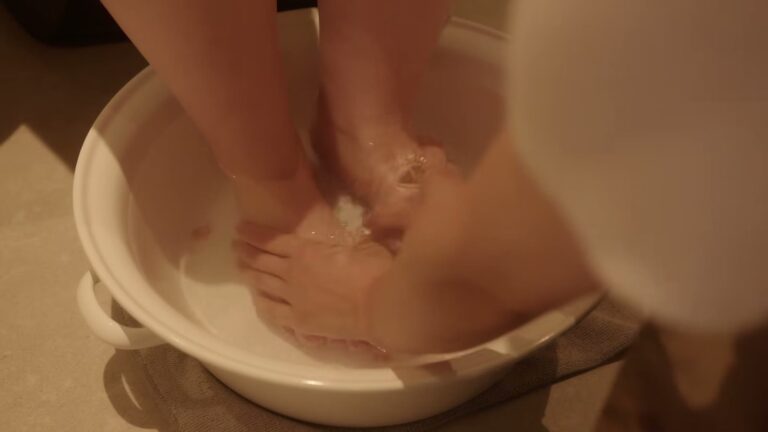
Back at the hotel, take a warm bath or foot soak.
- Fill the tub or a basin to at least the ankles.
- Use water around 40 to 42°C (104 to 108°F), warm and never scalding.
- Soak for 15 to 20 minutes, adding hot water as it cools.
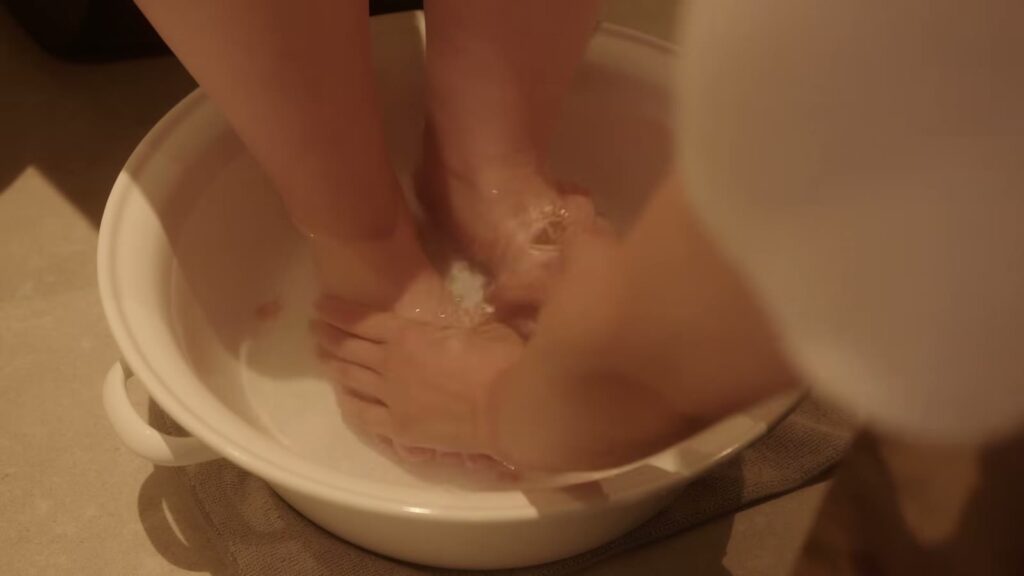
A warm bath until your forehead feels slightly damp is a traditional Japanese habit on humid days.
A warm, dry pause behind the temple
If the rain sets in for the afternoon, a slow, warm pause indoors can fit between the crafts center and the evening lights.
IKINUKI: a private head spa five minutes from Senso-ji
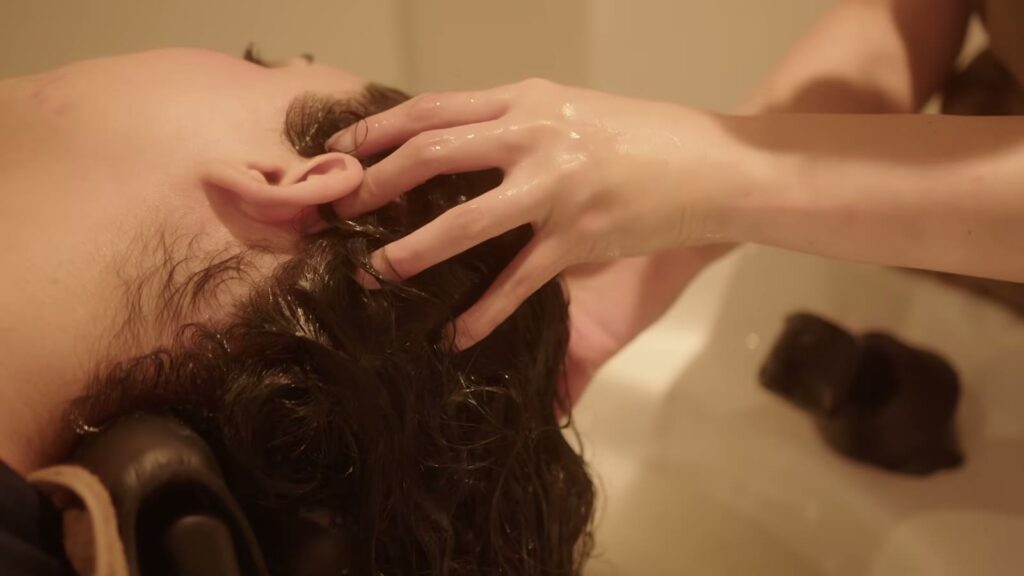
- Indoors, on the quiet side behind Senso-ji, five minutes on foot from the temple
- Every course begins with a warm foot bath
- Shampoo and a slow wet head spa
- You dry and style your hair yourself with the dryer provided, so you leave with dry hair
- Reservation only, booked online in English
Questions travelers ask
Is Senso-ji open in the rain?
Yes. The grounds can be walked at any hour. The main hall is open 6:00 to 17:00 (from 6:30, October to March).
Is Nakamise covered?
Do not count on it. Shin-Nakamise, the arcade that crosses it, is covered and stays dry in the rain.
Where can I get an umbrella?
Convenience stores in Japan sell clear plastic umbrellas, so you can pick one up on the way.
Will my hair be wet when I leave the head spa?
No. A hair dryer, straightener, and hair-care items are provided, and you dry and style your hair yourself before you go.

Written by the IKINUKI team
We are the spanists (head spa therapists) at IKINUKI, a private head spa for two in Asakusa, Tokyo. We welcome travelers from around the world, and we write about the simple Japanese self-care habits we share with our guests.
Supervised by Kampo Pharmacy Taiyodo (漢方薬局 太陽堂)
The self-care information in this article is supervised by Taiyodo, a kampo (traditional Japanese herbal medicine) pharmacy in Tokyo. tokyo-taiyodo.jp (Japanese)
This article is general self-care information, not medical advice. Last checked: November 2026.
Read next: Head spa for two · Menu and prices · Your first Japanese head spa · Access