Jet Lag at 5am? See Senso-ji in Asakusa Before the Crowds
It is 5 am in Tokyo, and you are wide awake. Your body clock is still somewhere over the ocean, and the hotel room feels very quiet.
Here is a better plan than scrolling in bed: a simple timeline for Asakusa and Senso-ji before the crowds, and three small morning habits from Japanese tradition.
Before you go. The main hall opens at 6:00, or at 6:30 from October to March. Mornings can be cold, so bring a layer. People come here to pray, so keep your voice low and do not block the path for photos. Trains start early, but check your first train, or walk if your hotel is near. If you feel dizzy or unwell, rest and see a doctor; your hotel front desk can help.
This morning’s quick list
| Time | What to do |
|---|---|
| 5:00 | Sip hot water, stretch, step outside |
| Before 6:00 | Walk the quiet temple grounds |
| 6:00 | Listen for the Bell of Time |
| 6:00 or 6:30 | Visit the main hall when it opens |
| Before 8:00 | See the painted shutters on Nakamise |
| From about 8:00 | Watch the shops open, find breakfast |
| 9:00 | Look over Asakusa from a free terrace |
| 10:00 | IKINUKI opens behind the temple |
5:00: a slow start in your room
Time: 15 minutes. You need: a kettle and a window.
Jet lag is often easier when you get morning light and keep your meals and bedtime on local time. One or two early mornings are normal, so use them.
Have a cup of hot water, open the curtains, and stretch before you go out. The habits are below.
Before 6:00: the quiet temple grounds
The grounds of Senso-ji can be walked at any hour. Before the shops open, the long approach is calm, and you can walk it at your own pace.
- Start at Kaminarimon, the large gate with the red lantern at the start of Nakamise.
- Walk slowly up the street toward the main hall and the five-story pagoda.
- Keep your voice low. For many people here, this is part of their daily prayer.
6:00: the Bell of Time
At 6:00 every morning, the “Bell of Time” (toki-no-kane) is still rung on Bentenyama, a small mound in the temple grounds.
It is the bell in a famous haiku by Matsuo Basho. Stand still for a moment and listen.
6:00 or 6:30: the main hall opens
The main hall opens at 6:00, or at 6:30 from October to March. It closes at 17:00.
Step to the side if you want a photo, so others can pass.
Before 8:00: Nakamise with the shutters down
Nakamise is the shopping street that leads to the temple. While the shops are still closed, their shutters show a long series of painted murals.
The murals show Asakusa’s history and festivals, and were completed in 1989. Come later in the morning, and the shutters are already up.
9:00: Asakusa from above
The Asakusa Culture Tourist Information Center, opposite Kaminarimon, opens at 9:00.
Its 8th-floor observation terrace is free. From there you can look down over Nakamise toward the temple you walked through at dawn.
Three small habits for the morning
These come from Japanese tradition. They are simple enough for a hotel room.
- A cup of plain hot water (sayu). On waking, the body is said to be at its coolest. Sipping hot water slowly is a traditional way to warm up gently and wake the stomach before breakfast.
- Morning light and a long stretch. In East Asian thinking, morning sunlight brings warmth and energy for the day. Open the curtains, reach up tall, and take a few slow, deep breaths.
- A slow walk. Walking at an easy pace while you look around is a classic way to clear the head. Many people find it also helps them feel naturally tired at night.
Still in bed? Circle your ankles a few times each way before you sit up. It is a traditional way to get things moving before you stand.
After the walk
From about 8:00, the shops on Nakamise open one by one, through to late morning. The street fills up as they do.
- Breakfast: look for a place that opens early. A warm breakfast, such as a bowl of miso soup, is a traditional way to warm the body in the morning.
- Rest your legs: you will have walked a lot before most visitors arrive.
A pause for your head and shoulders
By 10:00 you have been up for five hours. Your legs are tired, and your neck, shoulders, and eyes may feel the early start too.
IKINUKI: a private head spa behind Senso-ji
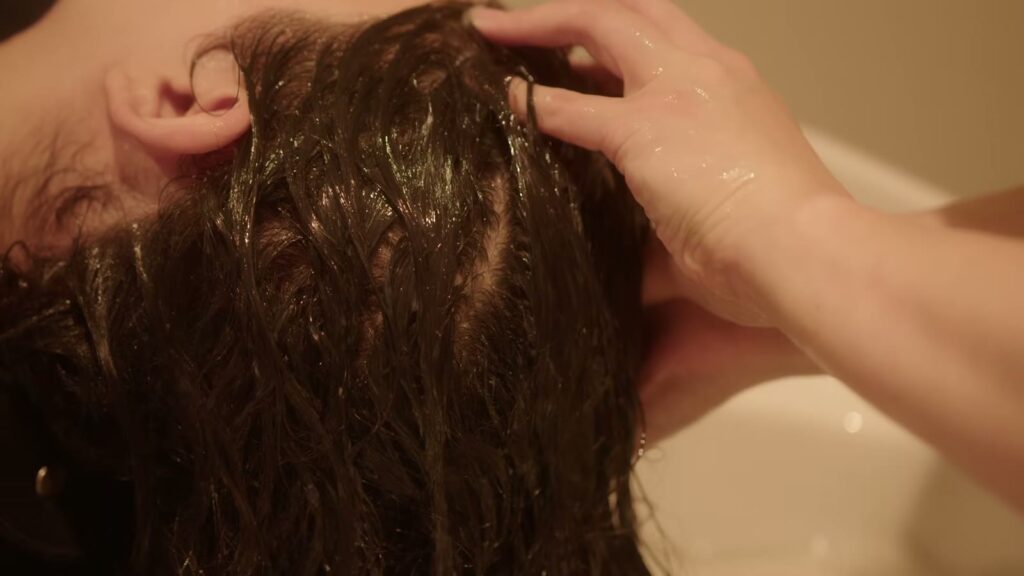
- Opens at 10:00, five minutes on foot from Senso-ji, on the quiet side behind the temple
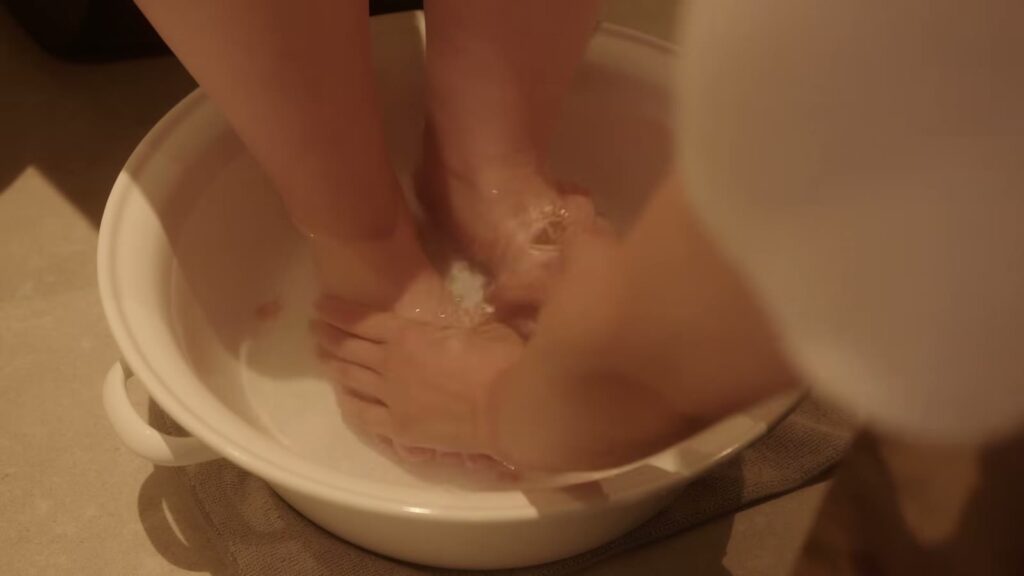
- Every course begins with a warm foot bath
- Care for the neck, shoulders, and eyes comes before a slow wet head spa
- Reservation only, booked online in English
Questions travelers ask
What time does Senso-ji open?
The grounds can be walked at any hour. The main hall is open from 6:00 to 17:00, and from 6:30 between October and March.
Can I walk the temple grounds before dawn?
Yes, the grounds can be walked at any hour. Use normal care, as you would in any city in the dark, and keep your voice low for people who come to pray.
When do the Nakamise shops open?
They open one by one, from about 8:00 to late morning. Before that, you can see the painted murals on their shutters.
Can I come to IKINUKI after my morning walk?
IKINUKI opens at 10:00 and is five minutes on foot from Senso-ji. It is reservation only, and you book and pay online in English.

Written by the IKINUKI team
We are the spanists (head spa therapists) at IKINUKI, a private head spa for two in Asakusa, Tokyo. We welcome travelers from around the world, and we write about the simple Japanese self-care habits we share with our guests.
Supervised by Kampo Pharmacy Taiyodo (漢方薬局 太陽堂)
The self-care information in this article is supervised by Taiyodo, a kampo (traditional Japanese herbal medicine) pharmacy in Tokyo. tokyo-taiyodo.jp (Japanese)
This article is general self-care information, not medical advice. Last checked: November 2026.
Read next: Head spa for two · Menu and prices · Your first Japanese head spa · Access